

Redis Caching Architecture: Sub-Millisecond Speed & 90% DB Offload
Protect your primary databases from overload by designing high-speed, in-memory caching tiers that serve millions of requests effortlessly.
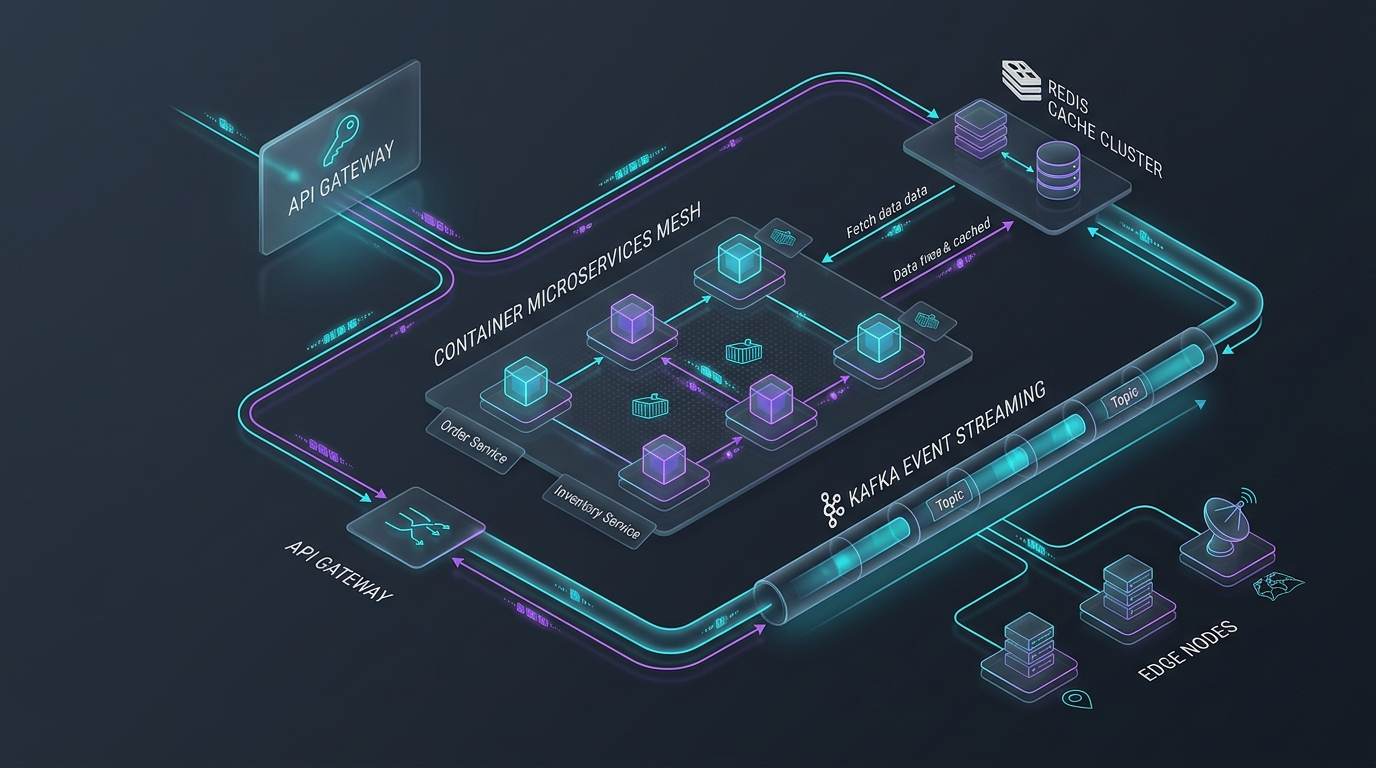
Where Bottlenecks Impact Your Customers & Revenue
Real-world friction, checkout hesitation, and performance barriers that directly reduce conversions and customer retention.
Database Collapses from Traffic Stampedes (Thundering Herd)
When a cache key expires during a flash sale, thousands of concurrent requests hit the database at once, taking it offline.
Serving Stale Data to Customers from Bad Invalidation
Improper cache invalidation causing customers to see outdated prices, incorrect inventory, or wrong user profiles.
Memory Overflows & Unpredictable Key Eviction
Failing to set proper TTLs and eviction policies, causing Redis to run out of memory and drop business-critical session data.
Network Serialization Overhead Limiting Cache Value
Storing bloated objects that take longer to deserialize in application memory than querying the database directly.
How We Fix It: The 14-Day Performance Sprint
A structured, milestone-driven engineering roadmap delivered directly into your staging repository with zero downtime.
Cache Access Pattern Analysis
Profiling read-to-write ratios, hot key distribution, and database query bottlenecks.
Multi-Tier Caching Setup
Combining fast in-memory L1 application caches with distributed Redis L2 clusters.
Stampede Mitigation (XFetch)
Implementing probabilistic early expiration (XFetch algorithm) and distributed mutex locking.
Event-Driven Invalidation
Establishing event-driven write-through or cache-aside invalidation pipelines tied to database mutations.
Stress Testing & Failover Test
Load testing up to 100,000 QPS, cluster failover validation, and operational alerting setup.
Tangible Business Outcomes in Your Codebase
What your executive and engineering leadership receives in your production repository. Zero theoretical slide decks—only verified speed improvements, clean code diffs, and documented operational stability.
Production Redis Caching Layer
Tested caching library code implementing XFetch early expiration and mutex locks.
Redis Cluster / Sentinel Setup
High-availability infrastructure configurations for automated failover and replication.
Telemetry & Eviction Dashboard
Real-time dashboard monitoring hit ratios, memory fragmentation, and hot-key traffic.
Real-Time B2B Analytics Platform (High Read Workload)
Database CPU pinning at 92% during peak hours; Cache Hit Ratio: 44%; Periodic Outages
Explore Audit Scope ↗Verified Production Telemetry Delta
Cache Hit Ratio: 96.2% | Database CPU dropped to 11% | P95 Response Time: 4ms
Related Engineering Workstreams
Pairing Redis caching with SQL optimization? Explore Database Performance Tuning.
Accelerating API responses with caching? Review our API Performance Optimization services.
Architect Your Redis Caching Tier
No exploratory sales calls. Direct asynchronous code remediation and engineering triage.
Full confidentiality under mutual NDA prior to architecture review.